 Image 1 of 1
What if some of the people who teach us most about how to live are already dead?
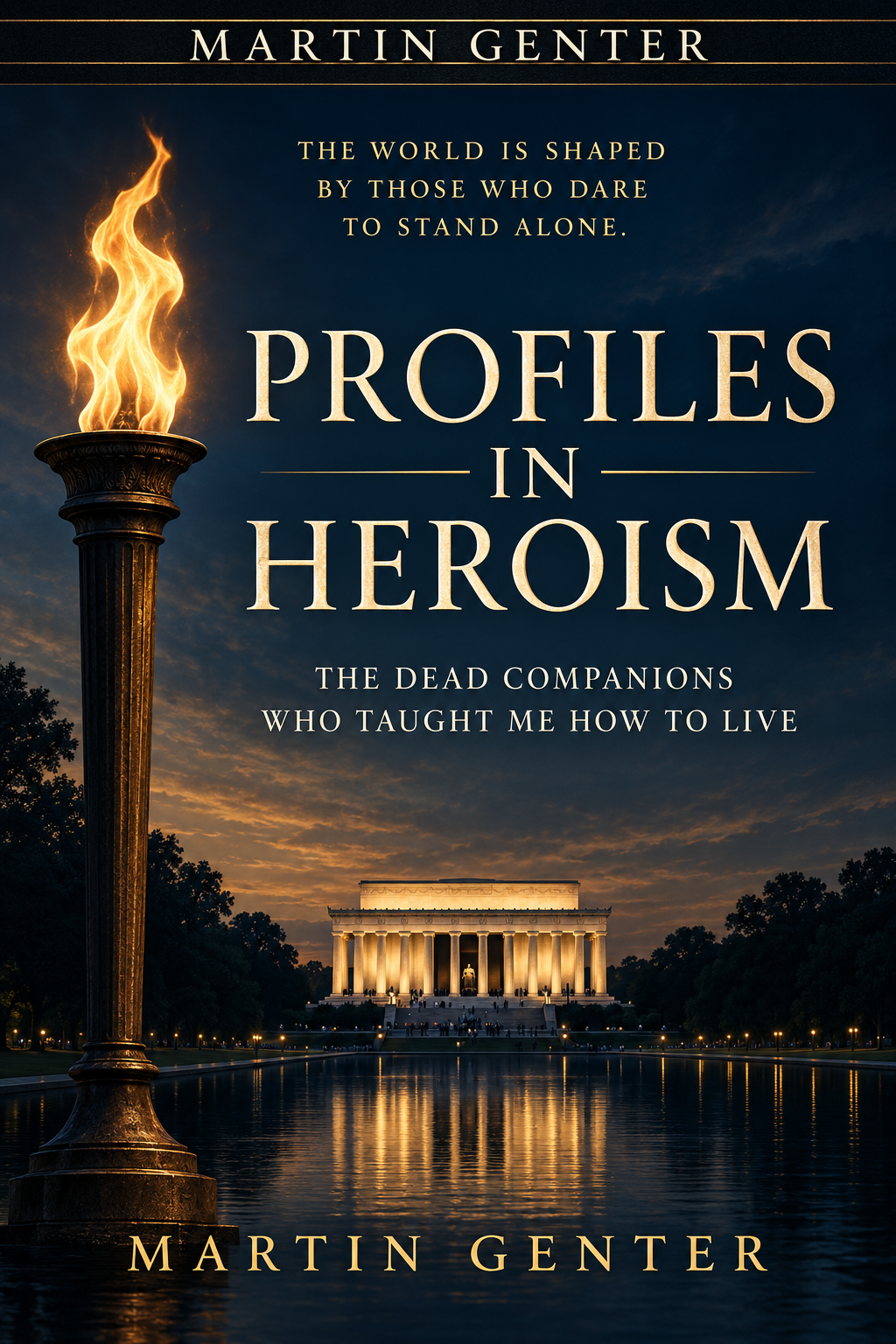
In Profiles in Heroism: The Dead Companions Who Taught Me How to Live, Martin Genter turns to the figures who became his companions through failure, grief, ambition, doubt, and the long work of becoming useful to others.
John F. Kennedy taught the discipline of elevation. Robert F. Kennedy showed how grief can deepen rather than destroy a human being. Martin Luther King Jr. demonstrated the terrible cost of loving a country enough to confront it. Abraham Lincoln revealed the endurance required to carry a divided republic without pretending that history offers clean choices. Ulysses S. Grant embodied duty without theater, perseverance after failure, and magnanimity after victory.
But this is not a book of saints carved in marble.
Their contradictions remain. Their failures remain. Their compromises, wounds, ambitions, and limitations remain. That is precisely why their lives still matter.
Blending biography, memoir, history, classical wisdom, and civic reflection, Genter asks a harder question than whether these people were admirable: What did courage require when the consequences were real?
And what does it require of us?
The final profile belongs not to a president, general, or martyr, but to the ordinary person who teaches, raises a family, protects a stranger, keeps a promise, serves a community, tells the truth when silence would be easier, or simply refuses to become cruel.
Heroism, this book argues, is not celebrity. It is disciplined service under pressure.
The dead cannot make our choices for us. They cannot repair our republic, keep our promises, confront our fears, or carry the burdens that have arrived in our generation.
But they can leave us a standard.
And sometimes, if we listen closely enough, the dead can teach us how to live.
What if some of the people who teach us most about how to live are already dead?
In Profiles in Heroism: The Dead Companions Who Taught Me How to Live, Martin Genter turns to the figures who became his companions through failure, grief, ambition, doubt, and the long work of becoming useful to others.
John F. Kennedy taught the discipline of elevation. Robert F. Kennedy showed how grief can deepen rather than destroy a human being. Martin Luther King Jr. demonstrated the terrible cost of loving a country enough to confront it. Abraham Lincoln revealed the endurance required to carry a divided republic without pretending that history offers clean choices. Ulysses S. Grant embodied duty without theater, perseverance after failure, and magnanimity after victory.
But this is not a book of saints carved in marble.
Their contradictions remain. Their failures remain. Their compromises, wounds, ambitions, and limitations remain. That is precisely why their lives still matter.
Blending biography, memoir, history, classical wisdom, and civic reflection, Genter asks a harder question than whether these people were admirable: What did courage require when the consequences were real?
And what does it require of us?
The final profile belongs not to a president, general, or martyr, but to the ordinary person who teaches, raises a family, protects a stranger, keeps a promise, serves a community, tells the truth when silence would be easier, or simply refuses to become cruel.
Heroism, this book argues, is not celebrity. It is disciplined service under pressure.
The dead cannot make our choices for us. They cannot repair our republic, keep our promises, confront our fears, or carry the burdens that have arrived in our generation.
But they can leave us a standard.
And sometimes, if we listen closely enough, the dead can teach us how to live.